Due to the surge in demand for artificial intelligence, Marvell, a major US network and optical communication chip manufacturer, recently issued a notice announcing a price increase for all product lines starting from January 1, 2025, taking the lead in the price increase trend in the optical communication field.

In a market where even storage may experience price drops, why is the optical chip so bold as to decide to increase prices starting from January next year?
The market has a decisive influence.
Optical chips are fundamental components for converting electro-optical signals, and their performance directly determines the transmission efficiency of optical communication systems.
Since its development in 1998, optical modules have been continuously evolving towards higher data rates, from 1.25 Gbit/s to 2.5 Gbit/s, then to 10 Gbit/s, 40 Gbit/s, 100 Gbit/s, single-wavelength 100 Gbit/s, 400 Gbit/s, and even 1T.
The higher the data rate and the more advanced the optical module, the higher the proportion of the value of the optical chip.
Nowadays, the market scale of optical chips is continuously expanding and occupying an increasingly important position in various downstream application fields. With the rapid development of communication technologies, the optical chip market shows strong growth momentum globally, mainly due to the increasing demand for high-speed, high-bandwidth, and low-latency communication in downstream application fields. For example, in data centers and cloud computing fields, high-density and high-performance optical interconnection solutions have become the core of infrastructure, and the application proportion of optical chips in these fields is continuously increasing.
According to C&C statistics, the global market size of optical chips for optical communication was $2 billion in 2020 and is expected to reach $3.6 billion in 2025, with a CAGR of approximately 12.59%. According to the forecast of Research and Markets, the market size of optical chips in China is expected to reach $2.607 billion in 2025, with a CAGR of approximately 15.16% from 2020 to 2025. In addition, optical chips play a crucial role in fields such as artificial intelligence and industrial automation. With the continuous upgrading of AI technology, the market demand for super-large computing power clusters is continuously increasing, driving the shipment of high-rate optical chips.
The AI optical chip Taiji developed by Tsinghua University uses light instead of electricity to process data and has an energy efficiency hundreds of times that of traditional electronic chips, suitable for complex AI tasks. In addition, the Shanghai Institute of Microsystem and Information Technology of the Chinese Academy of Sciences has developed a high-performance photon chip material that can be mass-produced, providing a new foundation for the future information industry.
The latest application cases of optical chips in the optical communication and optical computing fields mainly focus on optoelectronic hybrid integration technologies, especially the co-packaged optics (CPO) technology, which has promoted the research and application in the optical communication field. Companies such as Intel are committed to improving computing efficiency by combining optical interconnect I/O with electrical processors and have achieved remarkable results. Although CPO still faces some challenges, it is expected to be gradually commercialized in the next few years, bringing advantages such as reduced power consumption, increased integration, and reduced cost per bit.
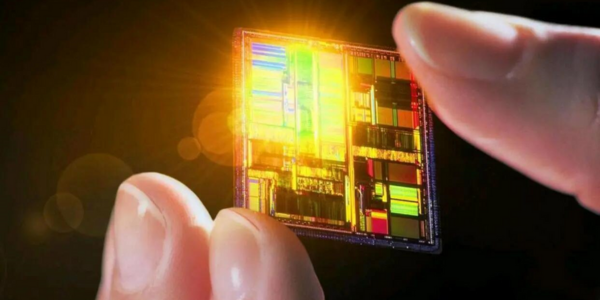
Ultraviolet optical communication utilizes photonic integrated circuit (PIC) technology and has the advantages of reducing system size, power, and cost. The Wei Tongbo team used InGaN materials with an asymmetric multi-quantum well structure to manufacture a monolithic integrated chip with a 450 nm wavelength visible light LED, a waveguide, and a photodetector, enhancing the optical connection between the LED and the PD.
In addition, researchers at IBM have made a breakthrough in using optical pulses to accelerate data transmission between chips. This technology can increase the performance of a supercomputer by more than a thousand times. This technology has significantly increased the computing power of supercomputers. Currently, the fastest supercomputer can reach a speed of 2000 trillion instructions per second, and photon technology can increase the speed to 100 billion billion times per second.
At the same time, with the commercialization of 5G communication and the popularization of the Internet of Things, the application of optical chips in mobile communication, wireless networks, and intelligent devices has become increasingly important. Overall, the growth of the optical chip market scale and the increase in its proportion in various downstream application fields reflect the crucial position of optoelectronic technology in modern communication and information fields and its indispensability in promoting scientific and technological progress and social development.
Interface (23)