A transistor generally refers to any single element based on semiconductor materials, including diodes, triodes, field-effect transistors, thyristors (the latter three all have three terminals) and others made of various semiconductor materials.
Compared with vacuum tubes, transistors have many advantages:
No component consumption
No matter how excellent a vacuum tube is, it will gradually deteriorate due to the change of cathode atoms and slow air leakage. Due to technical reasons, the same problem also existed at the beginning of transistor production. With the progress in material production and various improvements, the lifespan of transistors is generally 100 to 1000 times longer than that of vacuum tubes.
Extremely low power consumption
It is only one-tenth or a few-tenths of that of vacuum tubes. Unlike vacuum tubes, it does not need to heat a filament to generate free electrons. A transistor radio can run on a few dry cells for half a year or a year. This is difficult for vacuum tube radios.
No need for preheating
It starts working as soon as it is turned on. For example, a transistor radio makes a sound as soon as it is turned on, and a transistor television quickly shows a picture as soon as it is turned on. Vacuum tube devices cannot do this. After turning it on, it takes a while to hear the sound and see the picture. Transistors are very advantageous in military, measurement, recording, and other aspects.
Robust and reliable
It is 100 times more reliable than vacuum tubes and is resistant to impact and vibration, which are incomparable to vacuum tubes. In addition, the volume of transistors is only one-tenth to one percent of that of vacuum tubes, and it generates very little heat. It can be used to design small, complex, and reliable circuits. Although the manufacturing process of transistors is precise, the process is simple, which is conducive to improving the installation density of components.
Click here, Vacuum Tubes Vs Transistors, to know their difference.
Composition of transistors
A semiconductor triode is a semiconductor device that contains two PN junctions inside and usually has three external lead electrodes. It has functions such as amplifying and switching electrical signals and is widely used. Logic circuits in which both the input stage and the output stage use transistors are called transistor-transistor logic circuits. In books and practical applications, they are abbrev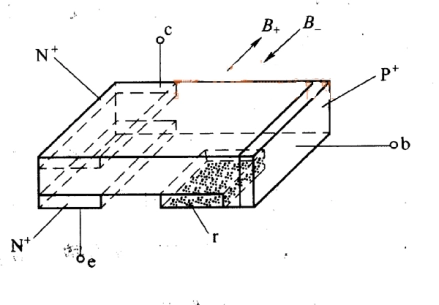 iated as TTL circuits. They belong to a kind of semiconductor integrated circuit. Among them, TTL NAND gates are the most commonly used. A TTL NAND gate is a circuit system composed of several transistors and resistance elements that are centrally manufactured on a very small silicon wafer and packaged as an independent component. Transistors are one of the most widely used devices in semiconductor triodes. They are represented by "V" or "VT" in circuits. (The old text symbols are "Q", "GB", etc.).
The vast majority of transistors are assembled on microchips (chips) together with diodes, resistors, and capacitors to make complete circuits. Analog digital, or both are integrated on the same chip. The cost of designing and developing a complex chip is quite high. However, when in production, the cost of designing and developing chips is spread over millions of chips. Therefore, the cost of each chip on the market is usually not very expensive. A logic gate contains 20 transistors, and in 2005, an advanced microprocessor used 289 million transistors.
Uses of transistors
A transistor is a semiconductor device often used in amplifiers or electrically controlled switches. Transistors are the basic building blocks for the standard operation of computers, mobile phones, and all other modern electronic circuits.
Transistors have various functions such as detection, rectification, amplification, switching, voltage stabilization, and signal modulation. Coupled with their fast response speed and high accuracy, they can be used for various digital and analog functions.
Transistors are one of the most critical components of modern electrical appliances. The importance of transistors in military plans and space voyages is self-evident. To compete for the dominant position in the electronic field, countries around the world have launched fierce competition. To achieve the miniaturization of electronic equipment, people spare no expense and give huge financial support to the electronics industry.
Main parameters of transistors
The main parameters of transistors include current amplification factor, power dissipation, frequency characteristics, maximum collector current, maximum reverse voltage, reverse current, etc.
Amplification factor
The DC amplification factor, also known as the static current amplification factor or DC amplification ratio, is the ratio of the collector current IC to the base current IB of a transistor when there is no change in the static input signal. It is generally represented by hFE or β.
AC amplification factor
The AC amplification factor, also known as the AC amplification factor or dynamic current amplification factor, is the ratio of the change in collector current △IC to the change in base current △IB of a transistor in an AC state. It is generally represented by hfe or β.
hFE or β are both different and closely related. The two parameter values are relatively close at low frequencies and have some differences at high frequencies.
Power dissipation, also known as the maximum allowable collector dissipation power PCM, refers to the maximum collector dissipation power when the transistor parameters do not change beyond the specified allowable values.
Power dissipation is closely related to the maximum allowable junction temperature and the maximum collector current of the transistor. When a transistor is in use, its actual power consumption is not allowed to exceed the PCM value, otherwise the transistor will be damaged due to overload.
Generally, transistors with a power dissipation PCM of less than 1W are called low-power transistors. Transistors with a PCM equal to or greater than 1W and less than 5W are called medium-power transistors. Transistors with a PCM equal to or greater than 5W are called high-power transistors.
Characteristic frequency fT
When the operating frequency of a transistor exceeds the cutoff frequency fβ or fα, its current amplification factor β value will decrease as the frequency increases. The characteristic frequency refers to the operating frequency of the transistor when the β value drops to 1.
Generally, transistors with a characteristic frequency fT of less than or equal to 3MHZ are called low-frequency tubes. Transistors with an fT of greater than or equal to 30MHZ are called high-frequency tubes. Transistors with an fT greater than 3MHZ and less than 30MHZ are called intermediate-frequency tubes.
Maximum frequency fM
The maximum oscillation frequency refers to the frequency corresponding to when the power gain of a transistor drops to 1.
Generally, the maximum oscillation frequency of high-frequency transistors is lower than the common base cutoff frequency fα, while the characteristic frequency fT is higher than the common base cutoff frequency fα and lower than the common collector cutoff frequency fβ.
Maximum current
The maximum collector current (ICM) refers to the maximum current allowed to pass through the collector of a transistor. When the collector current IC of a transistor exceeds ICM, parameters such as the β value of the transistor will change significantly, affecting its normal operation and even causing damage.
Maximum reverse voltage
The maximum reverse voltage refers to the highest operating voltage allowed to be applied to a transistor during operation. It includes the collector-emitter reverse breakdown voltage, the collector-base reverse breakdown voltage, and the emitter-base reverse breakdown voltage.
Collector-collector reverse breakdown voltage
This voltage refers to the maximum allowable reverse voltage between the collector and emitter of a transistor when the base is open. It is generally represented by VCEO or BVCEO.
Base-base reverse breakdown voltage
This voltage refers to the maximum allowable reverse voltage between the collector and base of a transistor when the emitter is open. It is represented by VCBO or BVCBO.
Emitter-emitter reverse breakdown voltage
This voltage refers to the maximum allowable reverse voltage between the emitter and base of a transistor when the collector is open. It is represented by VEBO or BVEBO.
Reverse current between collector and base ICBO
ICBO, also known as the collector junction reverse leakage current, is the reverse current betw
een the collector and base of a transistor when the emitter is open. ICBO is more sensitive to temperature. The smaller this value is, the better the temperature characteristic of the transistor.
Reverse breakdown current between collector and emitter ICEO
ICEO refers to the reverse leakage current between the collector and emitter of a transistor when the base is open, also known as the penetration current. The smaller this current value is, the better the performance of the transistor.
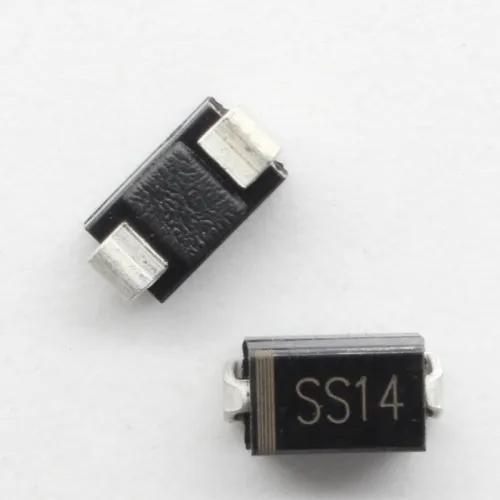
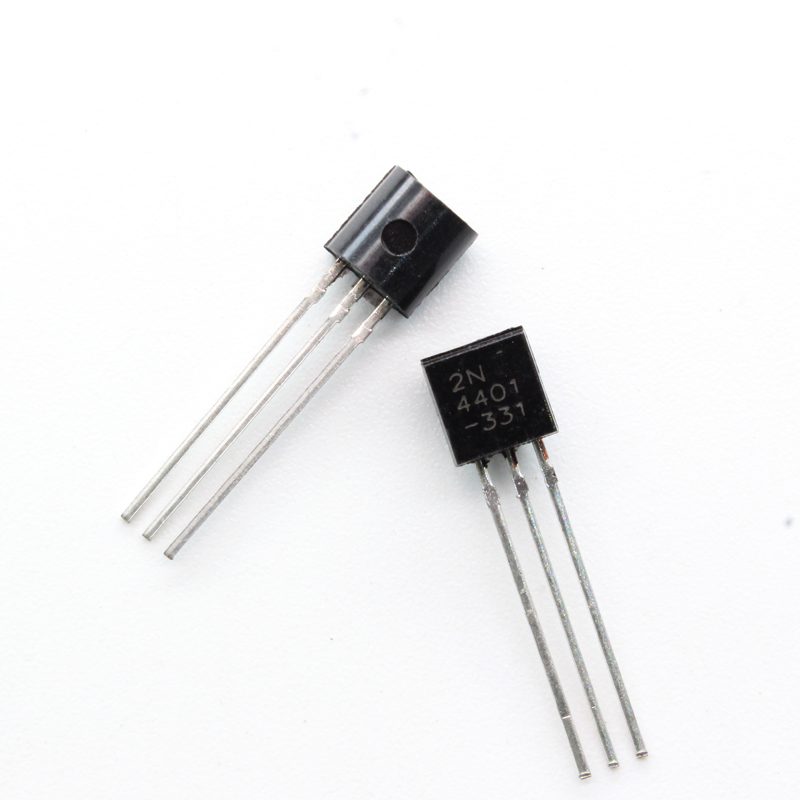
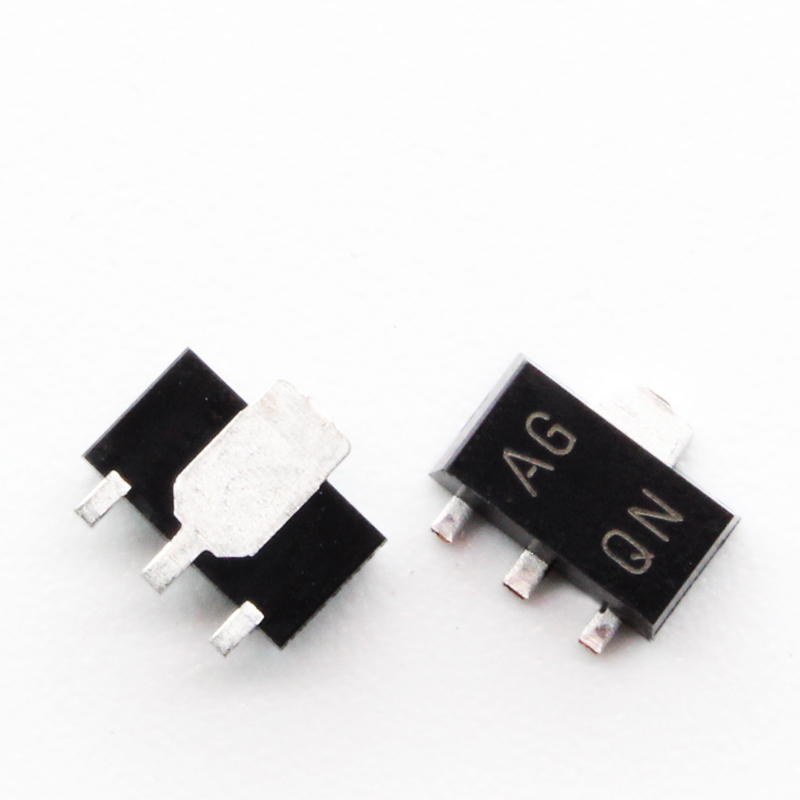 X0670 2N4401 2SA1797
WLS Electronic Components has a wide variety of transistors. You can click here to obtain any electronic component product you are looking for!

 iated as TTL circuits. They belong to a kind of semiconductor integrated circuit. Among them, TTL NAND gates are the most commonly used. A TTL NAND gate is a circuit system composed of several transistors and resistance elements that are centrally manufactured on a very small silicon wafer and packaged as an independent component. Transistors are one of the most widely used devices in semiconductor triodes. They are represented by "V" or "VT" in circuits. (The old text symbols are "Q", "GB", etc.).


