The STMicroelectronics STM32F401RET6 is a high-performance MCU featuring an ARM Cortex-M4 core with FPU and ART Accelerator, offering 84 MHz operation, 512KB Flash, and 96KB SRAM. It supports low-power modes (Stop/Standby) for energy-efficient applications. Equipped with 12-bit ADC, 11 timers, and diverse interfaces (I²C, SPI, USB OTG FS), it suits industrial control, consumer electronics, and IoT. Housed in LQFP64, it operates in -40°C to +105°C, balancing performance, power efficiency, and versatility for embedded systems.
STMicroelectronics STM32F401RET6's Features
1. Core & Performance
- CPU: 32-bit ARM Cortex-M4 with FPU (floating-point unit) and DSP instructions, enabling 105 DMIPS performance (1.25 DMIPS/MHz).
- ART Accelerator: Adaptive Real-Time Memory Accelerator for 0-wait-state execution from flash memory, up to 84 MHz frequency.
- Memory Protection Unit (MPU): Enhances security by managing memory access for RTOS and critical tasks.
2. Memory
- Flash Memory: 512 KB for program and data storage.
- SRAM: 96 KB system SRAM with 0-wait-state access at CPU speed.
- OTP Memory: 512 bytes of one-time programmable memory for secure configuration.
3. Power Management
- Voltage Range: 1.7 V to 3.6 V for core and I/Os, with VBAT support (1.65 V to 3.6 V) for RTC and backup registers.
- Low-Power Modes:
- Stop Mode: 42 µA typical (25°C, Flash in Stop mode), 10 µA minimum (Deep power down).
- Standby Mode: 2.4 µA (25°C, without RTC), 12 µA (85°C, with RTC).
- Sleep Mode: Reduced power with CPU stopped, peripherals active.
- Power Supervisors: POR, PDR, PVD, and BOR for reliable reset and voltage monitoring.
4. Peripherals
- ADC: 12-bit, 2.4 MSPS, 16 external channels with analog watchdog and DMA support.
- Timers: 11 timers including:
- 1 advanced-control timer (TIM1, 16-bit, PWM for motor control).
- 7 general-purpose timers (16/32-bit, up to 84 MHz).
- 2 watchdog timers (independent and window) and SysTick.
- Communication Interfaces:
- 3x I2C: Support for SMBus/PMBus, up to 1 MHz.
- 3x USART: Up to 10.5 Mbit/s (USART1/6), ISO 7816, LIN, IrDA.
- 4x SPI: Up to 42 Mbit/s, with I2S support for audio (SPI2/3 with full-duplex I2S).
- USB OTG FS: Full-speed (12 Mbit/s), device/host/OTG with on-chip PHY.
- SDIO: Support for SD/MMC cards, up to 48 MHz.
- GPIO: Up to 81 I/O pins (LQFP64 package: 50 GPIOs), 5V-tolerant, with interrupt capability and fast switching (up to 42 MHz).
5. Connectivity & Features
- Clock Sources: External 4-26 MHz crystal, 16 MHz internal RC, 32 kHz RTC oscillator (with calibration).
- DMA Controllers: 16-stream DMA with FIFO and burst support for high-speed data transfer.
- Debug Interface: SWD/JTAG for debugging, Embedded Trace Macrocell (ETM) for trace functionality.
- RTC: Subsecond accuracy, hardware calendar, and wake-up from low-power modes.
6. Packaging & Thermal
- Package: LQFP64 (10x10 mm, 64 pins), ECOPACK2 compliant (lead-free, RoHS).
- Temperature Range: Industrial grade: –40 °C to +85 °C (junction temperature up to 125 °C).
7. Compatibility
- Software/Feature Compatibility: Drop-in replacement for other STM32F4 series (e.g., F405/F407) with minor PCB adjustments.
Applications
Ideal for low-power and high-performance applications such as:
- Motor control and industrial automation (PLCs, inverters).
- Medical devices, home audio, and sensor hubs.
- Communication systems and embedded control.
Ordering Information
- Part Number: STM32F401RET6 (64-pin LQFP, 512KB Flash, industrial temperature range).
STMicroelectronics STM32F401RET6's Applications
1. Industrial Control and Automation
- Motor Drive and Motion Control:
- Equipped with advanced timers (e.g., TIM1 for PWM with dead-time control) and high-speed ADC, it supports precise motor control for servo drives, inverters, and industrial machinery.
- Suitable for applications requiring real-time feedback and control, such as conveyor systems, robotics, and CNC machines.
- Industrial Electronics:
- PLC (Programmable Logic Controllers), circuit breakers, and industrial sensors benefit from its robust communication interfaces (USART, CAN, I²C, SPI) and high-temperature tolerance (–40 to +105 °C junction temperature).
- Reliable operation in harsh environments with ECOPACK2 compliance and 5V-tolerant I/Os.
2. Consumer Electronics
- Home Audio and Appliances:
- Audio processing via I²S interfaces and dedicated audio PLL (PLLI2S) enables high-fidelity audio systems, smart speakers, and home theater equipment.
- Low-power modes (Stop/Standby) suit battery-powered devices like portable speakers or smart home gadgets.
- Printers and Scanners:
- High-speed communication (USB OTG FS, SDIO) and DMA controllers facilitate data transfer for peripheral connectivity in imaging devices.
- Efficient memory management (512KB Flash, 96KB SRAM) supports firmware for complex print/scan algorithms.
3. Medical Devices
- Portable Medical Equipment:
- Low-power consumption and compact packages (e.g., WLCSP49, UFQFPN48) are ideal for battery-driven devices like glucose monitors, wearable health sensors, or portable diagnostic tools.
- Precision ADC and temperature sensor enable accurate analog signal acquisition for medical sensing applications.
4. Communication and Networking
- Industrial Communication Systems:
- Multiple USART, CAN, and Ethernet (via external PHY) support for modems, gateways, and IoT edge devices.
- Secure digital input/output (SDIO) for memory card interfaces in data loggers or communication hubs.
- Alarm and Security Systems:
- High-speed GPIO and interrupt capabilities enable real-time response in security cameras, access control systems, and intrusion detectors.
- RTC with subsecond accuracy for time-stamping events in alarm systems.
5. Embedded and Mobile Solutions
- Mobile Phone Sensor Hubs:
- Low-power modes and compact form factor (e.g., 7x7mm UFQFPN48) make it suitable for auxiliary processing in smartphones, managing sensors (accelerometers, gyroscopes) with low power draw.
- HVAC and Home Automation:
- Control of heating, ventilation, and air conditioning systems via multiple communication interfaces (I²C for sensors, SPI for displays) and real-time clock for scheduling.
6. IoT and Edge Computing
- Edge Nodes and Sensors:
- Balances performance (105 DMIPS, FPU/DSP instructions) and low power for edge devices requiring data processing (e.g., environmental sensors, smart meters).
- Secure boot and memory protection unit (MPU) enhance security for IoT applications.
Applications Summary
| Category |
Examples |
| Industrial Control |
Motor drives, PLCs, inverters, circuit breakers |
| Consumer Electronics |
Home audio, printers, scanners, smart home devices |
| Medical Equipment |
Portable sensors, diagnostic tools, wearables |
| Communication & IoT |
Gateways, modems, security systems, smart meters |
| Embedded Systems |
Sensor hubs, edge nodes, battery-powered devices |
| HVAC & Home Automation |
Thermostats, ventilation systems, lighting control |
STMicroelectronics STM32F401RET6's Attributes
| Supply Voltage Min Volt |
1.7 |
Supply Voltage Max Volt |
3.6 |
| Operating Temp Min Celsius |
-40.0 |
Operating Temp Max Celsius |
85.0 |
| Core |
Arm Cortex-M4 |
ECCN US |
3A991.a.2 |
| ECCN EU |
NEC |
Packing Type |
Tray |
| RoHs compliant |
Ecopack2 |
Grade |
Industrial |
| Package Name |
LQFP 64 10x10x1.4 mm |
|
|
STMicroelectronics STM32F401RET6's Symbol, Footprint and 3D Model
STMicroelectronics STM32F401RET6's Category-Microcontroller
A microcontroller (MCU) is a central component of embedded systems, integrating a CPU, memory, peripherals, and interfaces into a single chip to enable efficient control and real-time processing in smart devices. Renowned for high integration, low power consumption, and flexibility, MCUs bridge the physical and digital worlds, driving applications from industrial automation to consumer electronics, medical devices, and IoT endpoints.
Key Features: Balancing Performance and Integration
MCUs excel in efficient computation and peripheral integration. Their CPUs, such as ARM Cortex-M series, support floating-point units (FPU) and DSP instructions, enabling complex algorithm processing for real-time control. Memory systems, including high-speed SRAM for data processing and Flash for firmware storage, balance speed and capacity. Peripherals like ADCs, DACs, timers, UART, SPI, and I²C simplify hardware design by directly connecting sensors, actuators, and communication modules. For example, 12-bit ADCs enable high-precision analog sampling, timers support PWM for motor control, and USB/Ethernet interfaces facilitate device networking.
Low-Power Design: Adapting to Diverse Scenarios
For battery-powered or energy-sensitive devices, MCUs offer low-power modes (sleep, stop, standby), reducing power consumption to microamps by dynamically adjusting clocks and power supplies. Standby mode, for instance, may draw as low as 2.4 µA, ideal for IoT sensors and wearables requiring long battery life.
Ecosystem and Development: Accelerating Application Deployment
MCUs benefit from robust ecosystems, including integrated development environments (e.g., STM32CubeIDE), hardware abstraction libraries (HAL), and extensive code examples, lowering development barriers. Evaluation boards and community support speed prototyping, while features like Memory Protection Units (MPU) and hardware encryption address industrial and IoT needs for reliability and security.
Applications: From Edge to Core
Microcontrollers (MCUs) play a pivotal role in industrial control (such as PLCs and inverters), consumer electronics (including smart home devices and wearables), medical equipment (like portable diagnostic devices), and automotive electronics (including body control systems and ADAS sensors). Their flexibility enables them to function as standalone units or collaborate with MPUs (Microprocessors) in hierarchical system architectures.
STM32F401RET6: A Paradigm of Performance and Versatility
As a flagship of STMicroelectronics’ STM32F401xE series, the STM32F401RET6 integrates an 84 MHz ARM Cortex-M4 core (105 DMIPS) with FPU and ART Accelerator for zero-wait-state flash execution, enhancing code efficiency. With 512KB Flash and 96KB SRAM, it handles mid-complexity firmware and real-time data processing, suitable for industrial control algorithms.
Featuring 11 timers (including advanced PWM for motor control), 12 communication interfaces (3x I²C, 4x SPI, USB OTG FS), and a 12-bit ADC (2.4 MSPS, 16 channels), it supports multi-device connectivity and high-precision sensing. Low-power performance shines with 146 µA/MHz in run mode and 10 µA in deep stop mode, paired with VBAT for RTC backup, ideal for battery and industrial standby applications.
With an industrial temperature range (-40°C to +105°C), 5V-tolerant I/Os, and a compact LQFP64 package (10x10 mm), it balances performance and space efficiency. From motor drives to smart audio devices, the STM32F401RET6 is a reliable choice for embedded developers, exemplifying MCUs’ role in driving smarter, more efficient edge and real-time control solutions.
STM32F401RET6's Manufacturer-STMicroelectronics
STMicroelectronics has made remarkable achievements in the field of microcontrollers (MCUs), and its STM32 series is particularly outstanding, becoming one of the benchmarks for global embedded development.
- Architectural Innovation and Performance Breakthrough
The STM32 series was among the first to adopt the ARM Cortex-M series cores. For example, the STM32F401RET6 is equipped with a Cortex-M4 core, which integrates a Floating-Point Unit (FPU) and Digital Signal Processing (DSP) instructions. Combined with the Adaptive Real-Time Accelerator (ART Accelerator), it enables zero-wait state flash execution, achieving a performance of 105 DMIPS. It strikes a balance between high-speed computing and low power consumption (only 146 µA/MHz in the running mode), meeting the dual requirements for performance and energy efficiency in applications such as industrial control and Internet of Things (IoT) terminals. Its Memory Protection Unit (MPU) enhances system security, making it suitable for task isolation in Real-Time Operating Systems (RTOS).
- Breadth of Product Line and Application Coverage
The STM32 series has established a complete matrix ranging from entry-level (such as STM32F0) to high-performance (such as STM32F7/F4), covering the 8/16/32-bit markets. Taking the STM32F401RET6 as an example, it integrates 512KB of Flash memory, 96KB of SRAM, 11 timers, and 12 communication interfaces (including USB, CAN, SDIO, etc.), making it suitable for scenarios such as industrial automation, medical devices, and consumer electronics. The low-power modes (as low as 10 µA in the Stop mode) extend the battery life of devices, and the wide operating temperature range (-40°C to +105°C) enables it to adapt to harsh environments.
- Ecosystem and Development Convenience
ST provides the CubeMX toolchain, which supports graphical configuration. Paired with the Hardware Abstraction Layer (HAL) library and the Low-Layer (LL) library, it significantly lowers the development threshold. Abundant software resources (such as RTOS adaptations and AI algorithm examples) and a hardware ecosystem (evaluation boards, third-party modules) accelerate product implementation. Its compatibility design (such as pin compatibility within the STM32F4 series) facilitates product upgrades and iterations, reducing the cost of hardware redesign.
- Market Leadership and Industry Influence
Thanks to its high cost-performance ratio, excellent performance, and ecosystem advantages, the STM32 series holds a significant share of the global 32-bit MCU market, and is widely used especially in the fields of industrial control, smart home, and automotive electronics. Its products support functional safety (such as ISO 26262 compliance) and information security (including hardware encryption and Secure Boot), conforming to trends such as the electrification of automobiles and the security requirements of the Internet of Things.
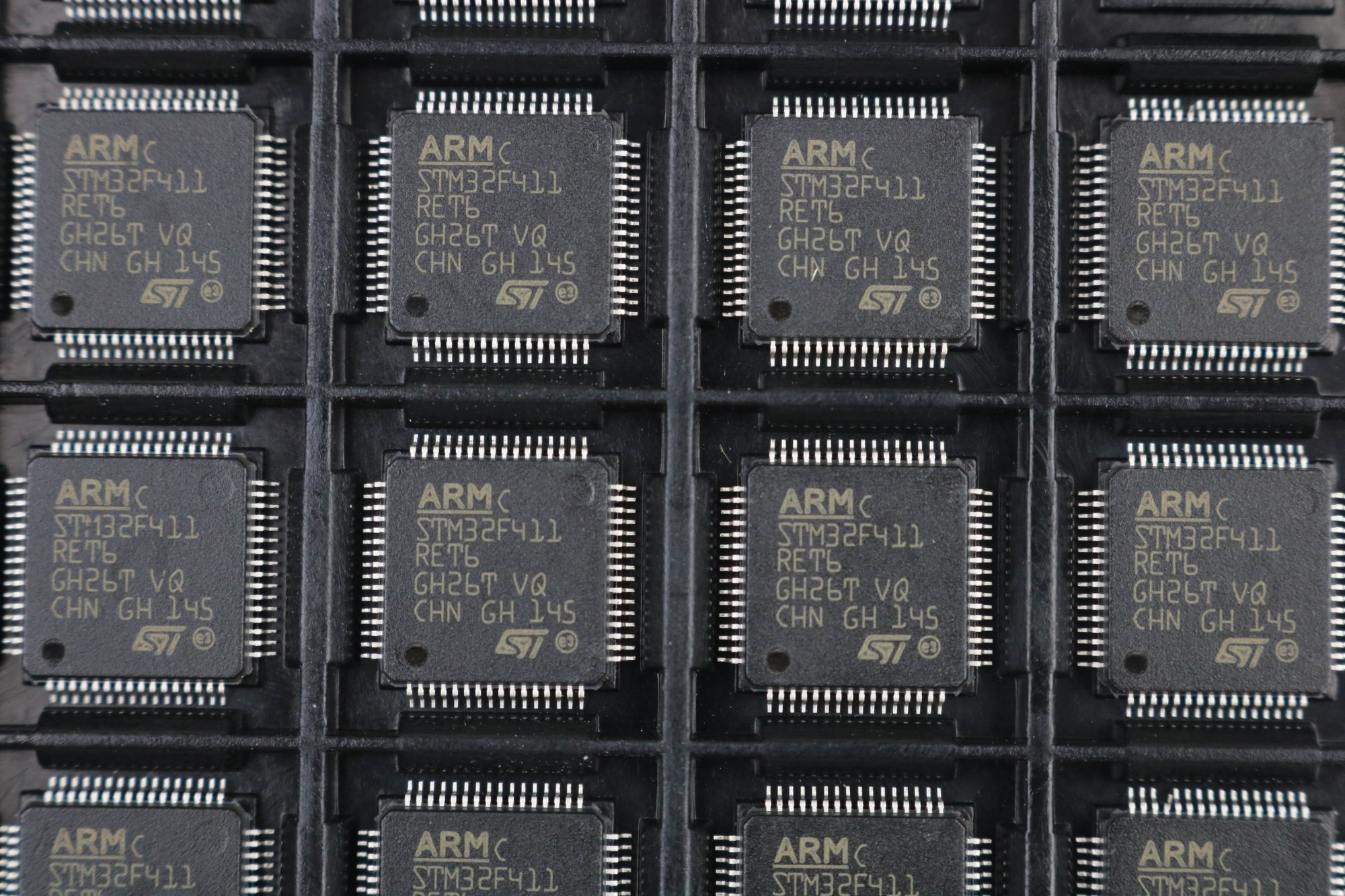
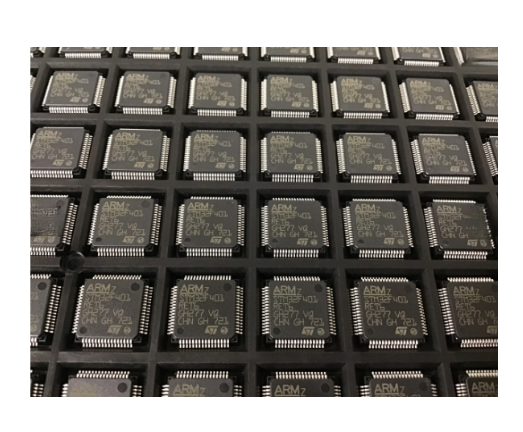
STM32F411RET6 alternative parts: STM32F401RET6
| Hide Shared Attributes |
 |
 |
| Part Number |
STM32F411RET6 +BOM |
STM32F401RET6 +BOM |
| Manufacturer: |
STMicroelectronics |
STMicroelectronics |
| Description: |
IC MCU 32BIT 512KB FLASH 64LQFP |
STMICROELECTRONICS STM32F401RET6 32 Bit
Microcontroller, Dynamic Efficiency Line,
ARM Cortex-M4, 84 MHz, 512 KB, 96 KB, 64 Pins |
| Factory Lead Time: |
12 Weeks |
12 Weeks |
| Mount: |
Surface Mount |
- |
| Mounting Type: |
Surface Mount |
Surface Mount |
| Package / Case: |
64-LQFP |
64-LQFP |
| Number of Pins: |
64 |
64 |
| Weight: |
342.689036mg |
342.689036mg |
| Data Converters: |
A/D 16x12b |
A/D 16x12b |
| Number of I/Os: |
50 |
50 |
| Watchdog Timers: |
Yes |
Yes |
| Operating Temperature: |
-40°C~85°C TA |
-40°C~85°C TA |
| Packaging: |
Tray |
Tray |
| Series: |
STM32F4 |
STM32F4 |
| Part Status: |
Active |
Active |
| Moisture Sensitivity Level (MSL): |
3 (168 Hours) |
3 (168 Hours) |
| Number of Terminations: |
64 |
64 |
| ECCN Code: |
3A991.A.2 |
- |
| Max Power Dissipation: |
313mW |
313mW |
| Terminal Position: |
QUAD |
QUAD |
| Terminal Form: |
GULL WING |
GULL WING |
| Supply Voltage: |
3.3V |
3.3V |
| Terminal Pitch: |
0.5mm |
0.5mm |
| Frequency: |
100MHz |
84MHz |
| Base Part Number: |
STM32F411 |
STM32F401 |
| Operating Supply Voltage: |
3.3V |
3.3V |
| Supply Voltage-Max (Vsup): |
3.6V |
- |
| Interface: |
I2C, I2S, IrDA, LIN, MMC, SD,
SDIO, SPI, UART, USART, USB |
I2C, I2S, IrDA, SPI,
USART, USB |
| Memory Size: |
512kB |
512kB |
| Oscillator Type: |
Internal |
Internal |
| RAM Size: |
128K x 8 |
96K x 8 |
| Voltage - Supply (Vcc/Vdd): |
1.7V~3.6V |
1.7V~3.6V |
| uPs/uCs/Peripheral ICs Type: |
MICROCONTROLLER, RISC |
MICROCONTROLLER, RISC |
| Core Processor: |
ARM® Cortex®-M4 |
ARM® Cortex®-M4 |
| Peripherals: |
Brown-out Detect/Reset,
DMA, I2S, POR, PWM, WDT |
Brown-out Detect/Reset, DMA,
I2S, POR, PWM, WDT |
| Program Memory Type: |
FLASH |
FLASH |
| Core Size: |
32-Bit |
32-Bit |
| Program Memory Size: |
512KB 512K x 8 |
512KB 512K x 8 |
| Connectivity: |
I2C, IrDA, LINbus, MMC/SD/SDIO, SPI,
UART/USART, USB OTG |
I2C, IrDA, LINbus, SDIO, SPI,
UART/USART, USB OTG |
| Supply Current-Max: |
34.5mA |
- |
| Bit Size: |
32 |
32 |
| Has ADC: |
YES |
YES |
| DMA Channels: |
YES |
YES |
| Data Bus Width: |
32b |
32b |
| PWM Channels: |
YES |
- |
| Number of Timers/Counters: |
8 |
8 |
| Core Architecture: |
ARM |
ARM |
| CPU Family: |
CORTEX-M4 |
- |
| Boundary Scan: |
YES |
- |
| Low Power Mode: |
YES |
- |
| Format: |
FLOATING-POINT |
- |
| Integrated Cache: |
NO |
- |
| Number of ADC Channels: |
16 |
12 |
| Number of External Interrupts: |
16 |
- |
| Length: |
10mm |
- |
| Height Seated (Max): |
1.6mm |
- |
| Width: |
10mm |
- |
WlS Electronic has a vast inventory of STMicroelectronics STM32F401RET6. We guarantee that these are authentic and brand - new components sourced directly from STMicroelectronics. If required, we can provide quality test reports for the STM32F401RET6. To get a quotation, simply fill in the desired quantity, your contact name, and your email address in the quick quotation form on the right - hand side. Our sales representatives will reach out to you within 12 hours. You can contact us online at any time. Moreover, you may send us an email at: SALES@WLSCHIP.COM.